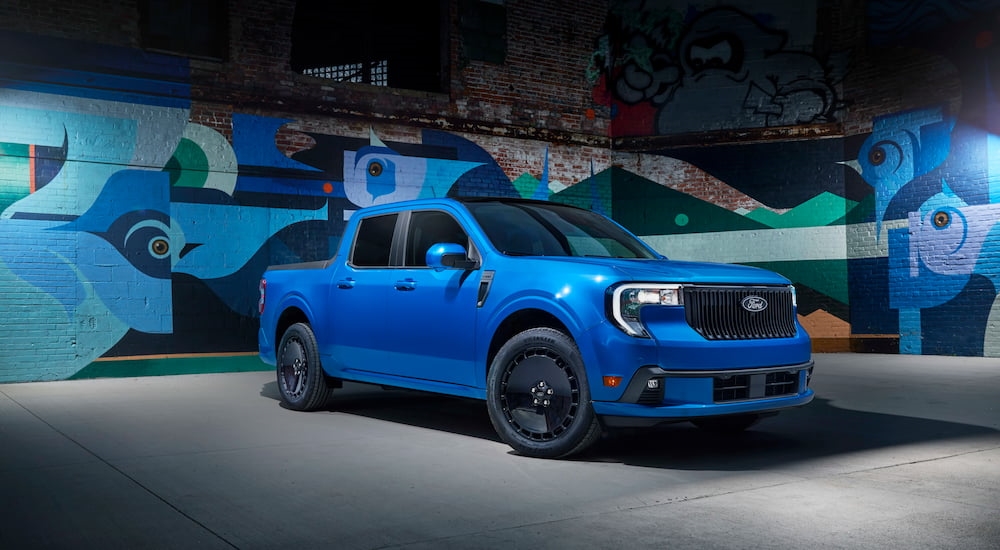
If you've been searching for a Ford Maverick for sale, you've probably already noticed something unusual about it. It doesn't behave like a traditional truck. It doesn't really try to, nor does it need to. That's part of the reason it's been so popular since it first showed up on our radars.
The 2026 Maverick Lobo takes that idea even further. This isn't just another trim level with a few cosmetic upgrades. It's a version of the Maverick that leans into a completely different kind of truck identity, one that's more about how it drives than how much it can haul. Somehow, that shift helped it earn one of the most recognizable awards in the industry, the North American Truck of the Year. What exactly is the Maverick Lobo, and why did it stand out enough to win?
Why the Maverick Was Already Different Before the Lobo
To understand why the Lobo matters, it helps to look at what the Maverick has already changed. For a long time, trucks followed a predictable formula. Bigger meant better, more power meant more capability, and most buyers were expected to adapt to the truck, rather than the other way around.
The Maverick flipped that idea on its head. Instead of building a smaller version of a full-size truck, Ford built something closer to a crossover with a bed. It uses a unibody platform, which is more common in SUVs, and makes it drive more like a crossover than a pickup. The result is a truck that feels easier to manage in everyday situations. Parking doesn't require planning, tight streets aren't a problem, and commuting feels normal and manageable, not bulky and oversized.
At the same time, the Maverick still does what people actually need a truck to do. There's a usable bed, solid payload capacity, and enough towing capability for light-duty work and DIY projects. That practical utility without the typical tradeoffs is what made the Maverick stand out in the first place. It also brought in a new kind of buyer. A lot of people who wouldn't have considered a truck before suddenly found one that made sense.
What Exactly Is the Maverick Lobo?
The Maverick Lobo builds on the Maverick's already stellar foundation but pushes things in a direction most trucks don't go. Instead of focusing on off-road capability or heavy-duty performance, the Lobo is built around how the truck behaves on pavement. It's closer to a street-performance truck than anything else in the segment.
At the center of the Maverick Lobo is the same 2.0L EcoBoost turbocharged I-4 engine as the other non-hybrid trims. This engine produces 250 hp and 280 lb-ft of torque, and is paired with an advanced all-wheel drive system and a unique seven-speed quick-shift transmission, rather than the traditional eight-speed automatic transmission you get with the other non-hybrid trims.
This combo alone would make it quicker than most compact trucks, but the changes go further than just power. The suspension is tuned differently, with a lower stance and tighter handling, not to mention genuinely sharper steering and braking response. There's even a dedicated "Lobo Mode," which adjusts the truck's behavior in more aggressive driving situations by using its torque-vectoring twin-clutch rear differential. This helps distribute power more effectively during cornering. That's not something you usually associate with trucks, but it makes a noticeable difference in how the Lobo handles.
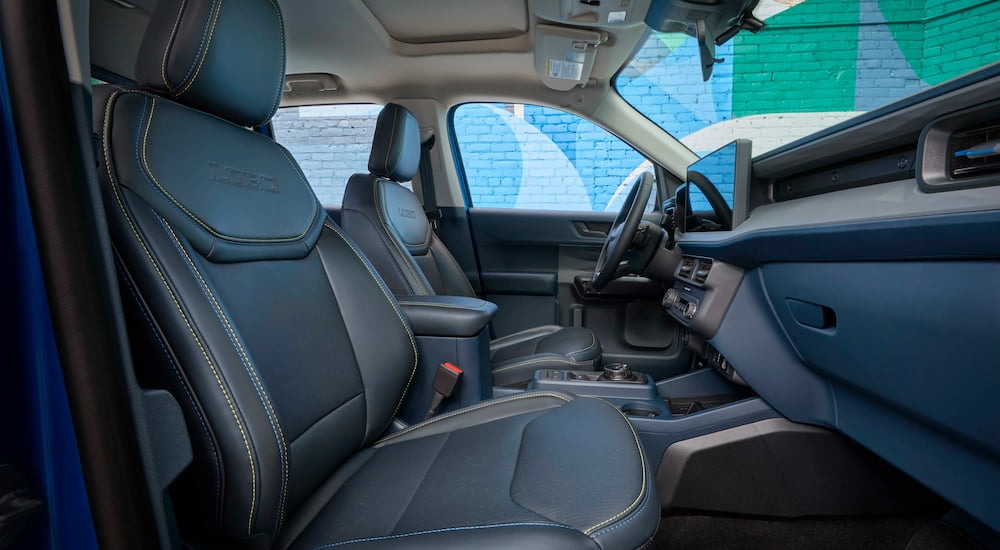
Of course, the Lobo is comfortable to sit in, with a standard eight-way power-adjustable driver's seat with power lumbar support and a six-way manually adjustable passenger's seat. These can be heated seats, if you choose. When it comes to tech, Ford has you covered. Not only are a host of safety features standard via Ford Co-Pilot360, including Pre-Collision Assist, Blind Spot Assist, Adaptive Cruise Control, and Reverse Brake Assist, but you also get a sizable 13.2-inch infotainment center complete with wireless Apple CarPlay and Android Auto, so your music library is readily available through your favorite apps for your outdoor adventure. It'll sound great, and can sound even better with the optional B&O premium audio system.
Visually, the Maverick Lobo doesn't blend into the crowd, either. Unique styling elements, larger wheels, and a more aggressive stance make it clear this isn't just another Maverick with a shiny new badge change. What you end up with is something that feels intentional. It's not trying to imitate a full-size performance truck. It's doing its own thing.
Why the Maverick Lobo Won North American Truck of the Year
Awards like North American Truck of the Year aren't handed out for a single reason. Instead, they look at a combination of factors, such as design, innovation, performance, and how well a vehicle fits into the current market. The Maverick Lobo checked all those boxes, but in a way that felt new rather than expected.
One of the biggest reasons is that the Lobo redefines what a truck can be. Instead of following the usual path of adding more size or capability, it focused on improving the driving experience. That, alone, sets it apart in a segment that often prioritizes numbers over feel.
It also manages to balance performance with practicality, which is harder to pull off than it sounds. The Lobo still functions as a truck. It still has a usable bed, still handles everyday tasks, and still fits into daily life without being inconvenient. The performance side doesn't replace that, but builds on top of it.
Another factor is how closely it reflects what buyers are actually doing with trucks right now. Before the Lobo existed, Maverick owners were already modifying their trucks, lowering them, changing the wheels, adjusting the suspension, and tuning them into modern street trucks. Ford didn't invent that idea, but they responded to it. That kind of direct connection to real-world demands from real-world fans matters when awards are being decided. It shows that the vehicle isn't just innovative. It's relevant.
Then there's value. The Maverick has always been known for offering a lot without pushing into higher price ranges, and the Lobo continues that trend while adding a different kind of appeal. You're getting performance, styling, and everyday usability in one package, which is something that doesn't show up often in the truck market. Put all of that together, and it becomes easier to see why it stood out. It didn't just improve on what trucks already were. It introduced a different direction entirely.
Is This Where Trucks Are Headed?
With the impressive innovations behind the Maverick Lobo, it's understandable to wonder if this is the direction where trucks are headed. Ultimately, the Maverick Lobo doesn't replace traditional trucks, and it doesn't try to. Full-size pickups still serve a purpose, especially for heavy-duty work, and nobody is disputing that.
What the Maverick Lobo does instead is expand the definition of what a truck can be. It shows that there's room for something smaller, more efficient, and more focused on how it drives, without losing the core utility that makes a truck useful in the first place. If you've been searching for a Ford Maverick, the Lobo is a reminder that the lineup isn't standing still. It's evolving in ways that reflect how people actually use their vehicles today, and we're all here for it. If this direction continues, the idea of what a truck is supposed to be might look very different, even a few short years from now.